Viele Produkte oder Dienstleistungen ähneln sich in Qualität und Preis. Dann entscheidet das Erlebnis beim Kauf über den Vertriebserfolg. Um diese Erfahrung zu optimieren, müssen Marketing und Vertrieb den Entscheidungsprozess ihrer Zielgruppe genau verstehen. Dieses Verständnis gewinnen sie, indem sie eine sogenannte Buyer Persona zu erstellen.
Im B2B-Umfeld ist heute viel von „Customer Centricity“, „buyer-centric”, „Buyer Experience“ und Ähnlichem die Rede. Das hat gute Gründe. In einem YouTube-Video sagte der hellsichtige Verkaufsexperte Neil Rackham schon vor einigen Jahren:
„The average company got twice as many competitors as it had just five years ago. It’s a fast moving world.“
Und die Welt bewegt sich weiter. Märkte und Zielgruppen sind härter umkämpft als je zuvor. Die Produkte und Services der direkten Wettbewerber gleichen sich immer mehr. Hohe Qualität und Zuverlässigkeit sind für potenzielle Kunden eine Selbstverständlichkeit. Diese unaufhaltsame Dynamik wird auch als Commoditisierung bezeichnet.
Die Customer Experience rückt auch im B2B in den Focus
Auch wenn sich Produkte immer mehr ähneln, heißt das nicht, dass die Differenzierung zwischen den Anbietern schwindet.
Werden Produkte tendenziell austauschbar, rückt an die Stelle der Produktunterschiede die spezifische Kauferfahrung, die Käufer mit Anbietern sammeln.
Hier, bei der Interessenten- und Kundenbeziehung, trennt sich die Spreu vom Weizen. Der Anbieter, der für Kunden einen höheren Wert generiert, indem er besser auf Erwartungen, Fragen und Bedürfnisse eingeht, ist in dieser neuen Wirtschaftswelt klar im Vorteil. Das gilt sowohl für B2B als auch für B2C.
Katie Martell schreibt in einem Vorwort zu Ardath Albees „How To Better Understand Your Buyers And Create Customer-Centric Marketing“ deshalb völlig zurecht:
„In an increasingly competitive market, your advantage may just be how well you understand your buyers.”
Die Zielgruppe verstehen – was heißt das?
Hier ein Beispiel: Ein technischer Fachplaner, den wir vor einiger Zeit befragt haben, berichtete uns, dass sich die Geräte am Markt primär in der Farbe unterscheiden. Das Produkt von Anbieter A sei blau, das von Anbieter B orange usw. „Die Technik, die da drin verbaut ist, ist jeweils sehr, sehr ähnlich.“
Nehmen wir an, dieser Ingenieur ruft beim Kundenservice eines Anbieters an. Er benötigt technische Informationen. Daraufhin landet er in einer Warteschleife oder im Call-Center: Dann „ist dieser Anbieter für mich gestorben. Die Zeit hab ich in meinen Projekten einfach nicht.“
Was folgt daraus?
Anbieter, die sich nicht auf die Situation des Ingenieurs einstellen, sind chancenlos. Dieser Fachplaner möchte möglichst schnell mit einem Kundenbetreuer sprechen, der technisch kompetent ist und ihm bei der Recherche „schnell und gut zuarbeitet“.
Neil Rackham trifft also den Nagel auf den Kopf, wenn er sagt:
„Everyone expects that you can perform and your competitors can perform. You become more of a commodity in that sense. So, what the buyer’s looking for there is not differences between products. They are looking very much more at differences on how they are being sold. Today how you sell has become much more important than what you sell.“
Übersetzt: “Jeder erwartet, dass Sie und Ihre Konkurrenten etwas leisten können. In diesem Sinne wird man eher zu einem Gebrauchsgegenstand. Daher sucht der Käufer nicht nach Unterschieden zwischen den Produkten. Sie suchen vielmehr nach Unterschieden in der Art und Weise, wie sie verkauft werden. Wie man verkauft, ist heute viel wichtiger geworden als das, was man verkauft.”
Warum ist eine Buyer Persona wichtig?
Die besten Marktchancen erschließen sich jetzt und in Zukunft diejenigen Unternehmen, die Entscheider;innen im Kaufentscheidungsprozess (und darüber hinaus) möglichst gut unterstützen. Das ist der Grund dafür, warum Anbieter Buyer Personas entwickeln (oder erstellen lassen).
Gut gemachte Buyer Personas helfen, die Denkweise der Zielgruppe beim Entscheiden zu verstehen. Dafür gilt es, ausführliche Gespräche mit Leuten aus wichtigen Kundengruppen zu führen. So erfahren Sie genau, wie typische Entscheider denken und welche Hilfe sie sich im Kaufprozess wünschen.
Eine Buyer oder Buying Persona ist ein recherchebasierter „Archetyp“ realer Zielkunden, der repräsentiert, welche Anforderungen, Wünsche und Ziele diese Kunden während ihrer Customer Journey verfolgen. Im Kern geht es darum, den Entscheidungs- und Kaufprozess bis ins kleinste Detail zu verstehen und dieses Wissen zu nutzen, um Aktivitäten in den kundennahen Bereichen (z. B. für Inbound Marketing oder die Erstellung einer Content Marketing Strategie) auf den „idealen“ Kunden zuzuschneiden. Dies soll auf lange Sicht den Umsatz steigern.
Drei Ansätze für die Erstellung einer Buyer Persona
Von „Customer-led Growth“ zu reden, davon, die „buyer experience“ in den Fokus zu stellen und Strategien, Taktiken und Ansprache danach auszurichten, ist eine Sache. Eine ganz andere ist es, diese Idee mit Leben zu füllen.
Es gibt massenhaft Content zum Thema Buyer Persona: Blogtexte, Whitepaper, E-Books, Bücher. Sie lassen sich jeweils einem von drei Ansätzen zuordnen:
- „Guessing-Game“ mit Template
- Multi-methodisches Forschungsdesign
- Interviewauswertung
1.) Buyer-Persona-Vorlage: Ein „Guessing Game“
Der Ausdruck „Buyer Personas“ stammt aus Adele Revellas gleichnamigem Buch. Die US-amerikanische Beraterin vom Buyer Persona Institute kritisiert es scharf, sich auf Annahmen und Erfahrungen zu stützen:
„Jeder würde zustimmen, dass es besser ist, das Mindset der Kunden im Detail zu kennen, als um einen Tisch herum zu sitzen und das alte ‚guessing game‘ zu spielen.“
Das Konzept der Buyer Personas, für das Revella plädiert, setzt diesem Ratespiel ein Ende. Aber leider sind viele Personas, mit denen Unternehmen heute arbeiten, häufig Guessing-Game-Profile und keine richtigen Zielpersonen.
Viele Buyer Personas halten nicht, was sie versprechen
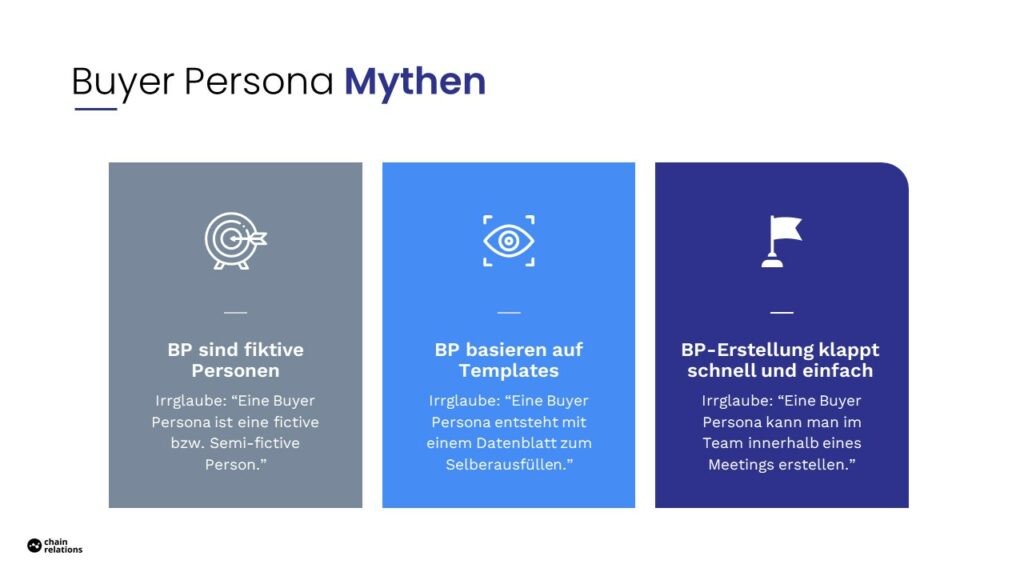
Blogbeiträge, die Titel wie „Mit unserer Vorlage in 5 Minuten zur Buyer Persona“ tragen, sind diesem Ansatz zuzuordnen. Sie liefern einen einfachen Steckbrief – ein „Buyer Persona Template“.
In einem solchen Template (teilweise auch in Form eines Tools) trägt man oben einen fiktiven Namen ein, z. B. „IT-Ingo“ oder “Geschäftsführer Guido”. Darunter sind Leerfelder zu Alter, Geschlecht, Job-Titel, Beziehungsstatus, Hobbies usw.
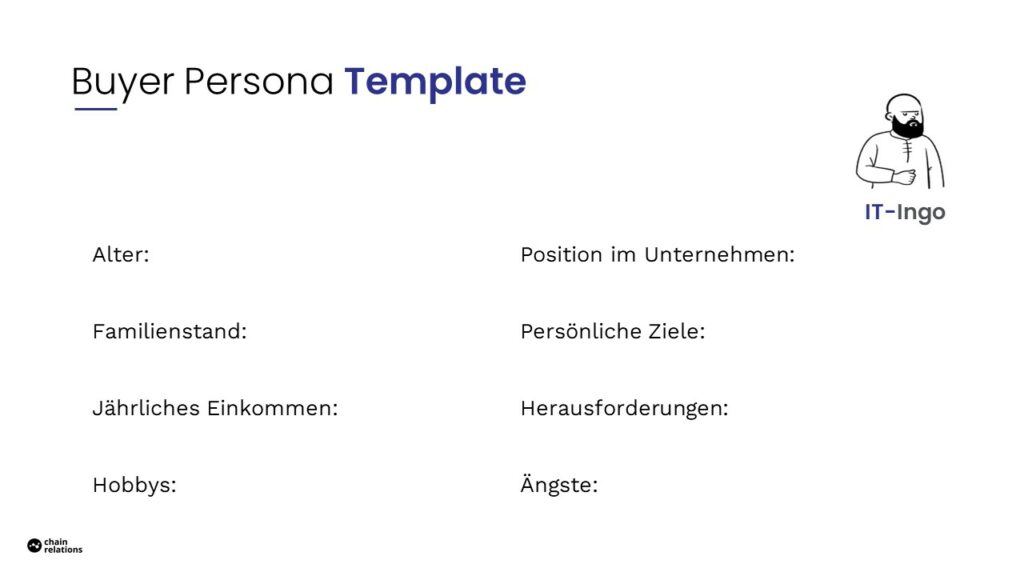
Folgendes Vorgehen wird häufig suggeriert: In Meetings ließe sich anhand des Persona-Templates in wenigen Schritten ein zielführender Konsens über eine fiktive Person erzielen: „Unser primärer Zielkunde ist ‚IT-Ingo‘. Er ist 38 bis 42 Jahre alt, hat Informatik studiert, arbeitet in der IT-Abteilung eines mittelständischen Unternehmens, ist ledig und spielt gerne Computerspiele.“ Fertig ist die „Buyer Persona“.
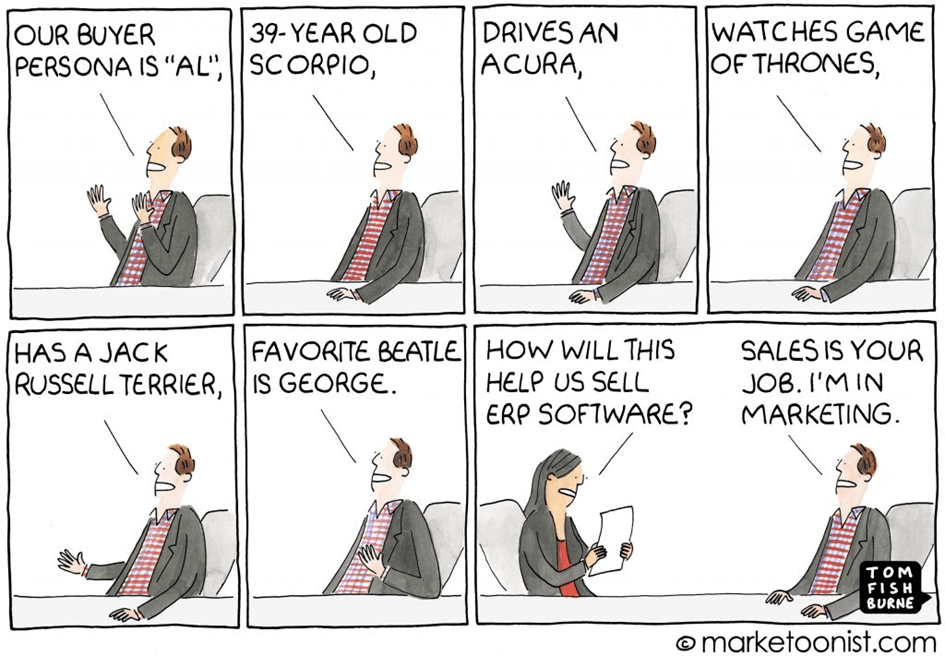
Solche „gebrainstormten“ Buyer-Persona-Profile bringen keinen Mehrwert. Es sind grobe Steckbriefe, die demografische Daten bzw. ungeprüfte Annahmen protokollieren. Sie gewähren keinerlei Einblick in die Entscheidungsfindung bzw. das Kaufverhalten einer Zielgruppe. Sie fokussieren sich stattdessen auf eine greifbare Persona, der die wichtigsten Informationen fehlen. Deshalb inspirieren sie die kundennahen Teams kaum, z. B. beim Erstellen von Content.
Die Inspiration für diese Art von Buyer Personas stammt von den sogenannten User Personas. Diese nutzte und beschrieb erstmals Alan Cooper für seine Arbeit als Software-Entwickler. Er versuchte sich damit die Anwender:innen eines Produkts vorzustellen, um deren Erwartungen zu erkennen und im Entwicklungsprozess zu priorisieren.
2.) Multi-methodisches Forschungsdesign
Der zweite Ansatz erhebt Buyer-Persona-Projekte in den Rang einer „harten Wissenschaft“. Empfohlen wird, dass sowohl quantitative als auch qualitative Daten in die Auswertung einfliessen.
Die Erstellung von Buyer Personas umfasst demnach:
- die Analyse von Web-Analytics-Daten,
- das Recherchieren und die Analyse von Social-Media-Daten,
- qualitative Interviews mit Kunden und Interessenten,
- Gespräche mit Verkaufs- und Service-Mitarbeiter:innen,
- quantitative Umfragen (Surveys) sowie
- die Analyse weiterer In-house-Daten.
Bei diesem Ansatz kommen echte Daten zum Einsatz. Ein Nachteil springt jedoch sofort ins Auge: Diese Art der Marktforschung ist äußerst aufwändig und damit auch teuer.
Aber es gibt noch einen zweiten, weniger offensichtlichen Nachteil: Es entsteht eine Masse an Daten, die analytisch kaum noch zu bewältigen ist. Die Gefahr, Datenfriedhöfe anzulegen, ist groß.
3.) Interview-Auswertung
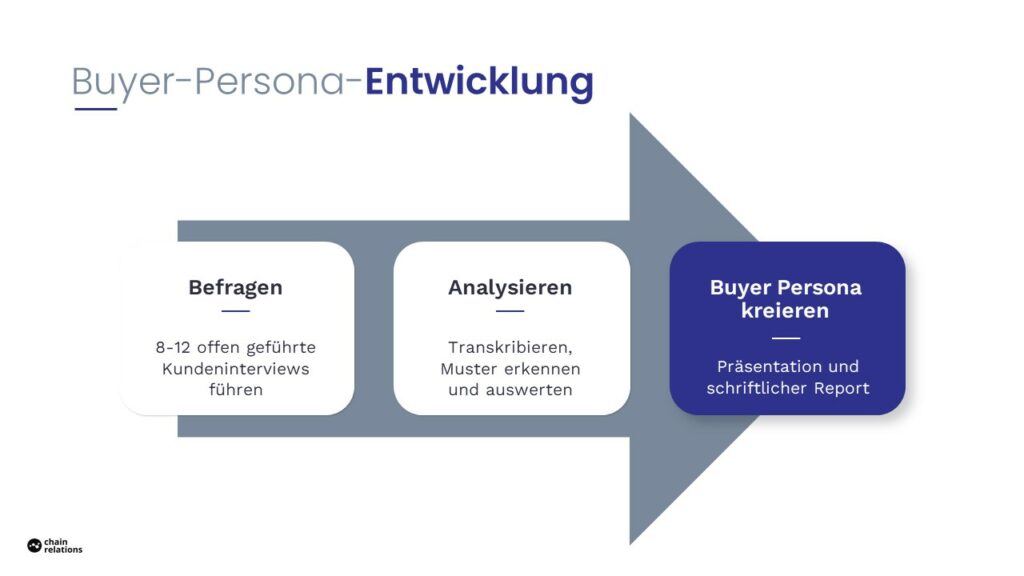
Dieser Ansatz liegt zwischen den beiden Extremen und entspricht der Methode von Adele Revella. Eine Buyer Persona basiert in diesem Fall auf acht bis zwölf offenen bzw. narrativen Interviews, in denen Entscheider:innen ihre Customer Journey Erfahrungen darlegen. Diese Gespräche werden ausgewertet und in Berichte überführt, die für operative Vertriebs- und Marketingmaßnahmen (Kampagnen für die Generierung von Leads, Content, Ad-Copy etc.) nutzbar sind.
Interview-basierte Buyer Personas erstellen
Für welchen der drei Ansätze sollten Sie sich entscheiden? Die Antwort fällt leicht: Den größten „Return On Investment“ liefert der letzte Ansatz.
Phase I: Interviews führen
Zunächst müssen Sie die Problemlage klären und entscheiden, auf welche Kundensegmente Sie sich bei der Befragung konzentrieren. Ihre Idealkunden (Ideal Customer Prodiles/ICP) sind dafür das beste Modell.
Anschließend ermitteln Sie in passenden Kundenunternehmen Personen, die in Frage kommen (vorzugsweise Fachentscheider:innen, die vor etwa drei bis sechs, maximal bis achtzehn Monaten an der Entscheidung für oder gegen ihr Angebot beteiligt waren). Die ausgewählten Personen werden kontaktiert und informiert sowie Gesprächstermine vereinbart. Wenn Sie mögen, können Sie den Befragten auch ein kleines Dankeschön zukommen lassen. In der Praxis ist dies selten notwendig.
Sie müssen eine passende Einstiegsfrage für die B2B Persona entwerfen. Wenn das betrachtete Produkt bzw. der Service relativ komplex sind und dem Kauf daher eine ausgeprägte Customer Journey zugrunde liegt, muss zu Beginn explizit nach dieser gefragt werden. Zum Beispiel:
„Versetzen Sie sich einmal zurück an den Anfang Ihrer Kaufentscheidung. Ich wüsste gerne, was der Auslöser war. Wie kam es überhaupt dazu, dass Sie sich auf die Suche begeben haben?“
Es geht darum, Ansprechpartner:innen an den Anfang des Entscheidungsprozesses zurückzuführen. Die befragte Person soll Vorgehensweisen, Auswahlkriterien, Frustrationen, Herausforderungen und Hürden ausführlich schildern.
Buyer-Persona-Interviews werden offen geführt
Sie als Anbieter arbeiten dabei keinen vorgefertigten Fragenkatalog ab, sondern hören sich die Geschichte des Kunden an (Storylistening). Fragen hierzu entwickeln Sie ad hoc im Gesprächsverlauf. Daher spricht man auch von „offenen“ Interviews.
Schmiegen sich Ihre Fragen an das Gesagte an, führt dies zu einem Gespräch, das Gedanken, Ziele und Herausforderungen Ihrer Zielgruppe offenbart. Dieses werden aufgezeichnet, verschriftet und ausgewertet.
In den Fragen und der Schwerpunktsetzung unterscheidet sich jedes Gespräch vom anderen. Auch die Länge variiert. Der Gesprächstermin kann 15 Minuten oder auch eine Stunde dauern.
Im Idealfall können Sie Ihren Kontakt persönlich besuchen und den Dialog mit dem Handy oder Diktiergerät aufzeichnen. Heutzutage nutzen wir jedoch in der Regel Teams oder Zoom und nehmen Gespräche so leicht auf. Dies erleichtert die Auswertung außerordentlich.
Phase II: Interviews auswerten
Die Aufnahmen müssen im nächsten Schritt wörtlich verschriftet werden. Hierbei zeigt sich schnell, wie arbeitsintensiv die Auswertung des Materials ist. Haben Sie zum Beispiel fünf offene Interviews mit Fachentscheider:innen geführt, kann das Text-Volumen bereits etwa 70 bis 90 DIN A4-Seiten (bei einer Schriftgröße von 12) umfassen. Wenn Sie die Interviews per KI transkribieren lassen, müssen Sie aufpassen, dass der Prompt die wörtliche Verschriftung einfordert. Danach ist es schwer, Abweichungen zu erkennen.
Anschließend müssen Sie die Texte strukturiert auf Buying Insights auswerten (dazu gleich mehr). Die so gewonnenen Erkenntnisse fassen Sie kompakt in einem übersichtlichen Bericht, einer Präsentation o. Ä., zusammen.
Die 5 Buying Insights
Typische Erwartungen, Herausforderungen, Hindernisse, Bedürfnisse und Wünsche, denen Kunden auf der „Kaufentscheidungsreise“ begegnen, verdichten Sie zu einem Buyer-Persona-Typus und bereiten es so in einer leicht verständlichen Weise auf. Mitarbeiter:innen führen sich dann die jeweiligen Personas vor Augen, wenn Sie z. B. eine E-Mail oder einen Blogbeitrag schreiben oder eine neue Kampagne auf die Beine stellen.
Bei der Auswertung der Daten geht es darum, die Customer Journey der Befragten zu rekonstruieren und darin Muster zu erkennen, die sich für die operative Arbeit nutzen lassen. Orientierung bieten die 5 Rings of Buying Insights, die Adele Revella in ihrem Buyer-Persona-Buch vorstellt:
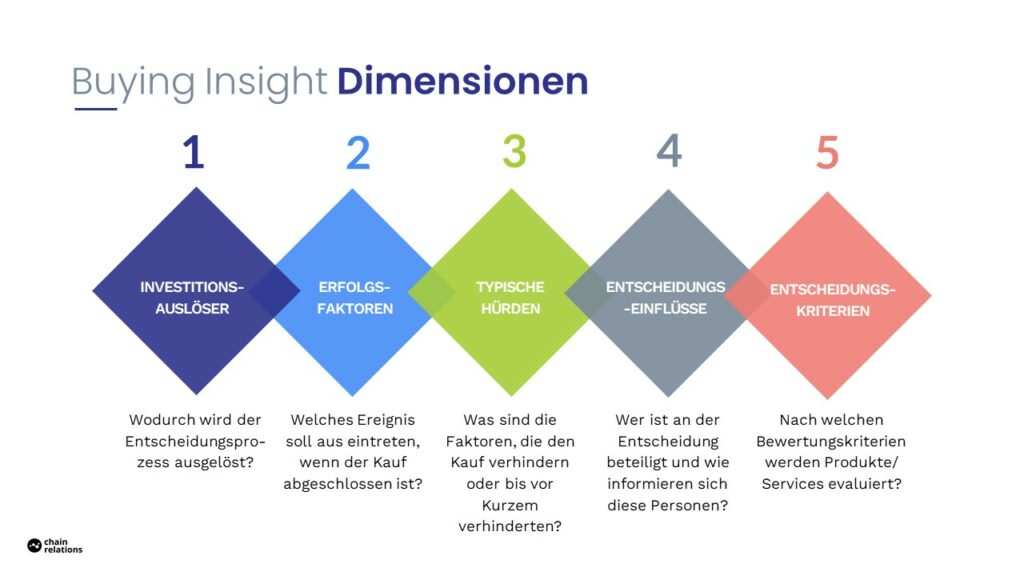
Investitionsauslöser
Der Investitionsauslöser beschreibt, warum ein Kunde in eine Lösung investiert hat (oder es noch tun will). Zugleich untersuchen Sie, warum andere Unternehmen aus Ihrer Zielgruppe mit dem Status Quo zufrieden sind. Im Vordergrund steht eine Veränderung in der Umwelt des Unternehmens. Diese hat die Suche nach einer Lösung erst in Gang gesetzt.
Erfolgsfaktoren
Die Erfolgsfaktoren beschreiben die positiven Szenarien und Ergebnisse, die sich Käufer:innen vom Erwerb eines Produkts oder einer Dienstleistung erwarten. Hier betrachten Sie die Ergebnisse, die sich der Kunde vom Kauf des Produkts verspricht.
Typische Hürden
Nimmt ein Kunde ein Problem wahr, heißt das nicht, dass er sich für eine Lösung entscheidet. Dazwischen können einige Hürden stehen, die eine Entscheidung hinauszögern oder gar verhindern. Dieser Fokusaspekt bringt oft negative Erfahrungen mit spezifischen Anbietern oder Produkten zu Tage. Auch fehlende Produkteigenschaften fallen unter diese Kategorie. Kunden, die sich für einen Wettbewerber entschieden haben, teilen Ihnen an dieser Stelle die Begründung mit.
Entscheidungseinflüsse
Diese Einsicht bietet einen Blick hinter die Kulissen, denn sie befasst sich mit der eigentlichen Entscheidungsfindung. Sie zeigt, wie Entscheider:innen Optionen evaluieren, Kandidaten eliminieren und schließlich ihre endgültige Wahl treffen. Dabei geht es nicht nur um das Entscheidungsgremium, sondern auch um Quellen, denen Ihre Kunden vertrauen (z.B. Suchmaschinen oder Peer-Empfehlungen). Im Fokus stehen alle Faktoren, die die Entscheidung beeinflussen.
Entscheidungskriterien
Wenn Kunden Anbieter vergleichen, geschieht das meist auf Basis von Produkteigenschaften. Dieser Aspekt umfasst die individuellen Evaluationskriterien. Hier beschreiben Kunden, warum sie bestimmte Optionen ausschlossen und weshalb andere Lösungen im Spiel blieben. Es geht um Lösungsmerkmale, die aus Käufersicht für den Erfolg nötig sind.
Erkenntnisse strukturieren
Eine sinnvolle Vorgehensweise bei der praktischen Datenauswertung besteht darin,
- jedem Insight eine Farbe zuzuweisen,
- die Transkripte durchzugehen und
- relevante Passagen farbig zu markieren.
Handelt es sich um gut geführte offene Interviews, finden sich alle fünf Farben in sämtlichen Transkripten. Nur die Gewichtung wird variieren, d. h. in dem einen Gespräche gibt es z. B. mehr grüne und rote Passagen als in einem anderen.
Sie können anschließend alle Passagen zu Insight 1 zusammenstellen und auf Überschneidungen und Differenzen hin analysieren. Das gleiche machen Sie mit den anderen Fokusperspektiven.
An der Oberfläche wirken die Passagen zu einem Insight oft recht unterschiedlich. Doch die darunter liegende strukturelle Gemeinsamkeit, die in der Analyse zu Tage tritt, ist in der Regel erstaunlich. Diese Ähnlichkeit bemerkt man während des Gesprächs oft gar nicht.
Wie viele Buyer Personas erhalten Sie?
Revellas Ansatz liefert häufig mehr als eine Buyer Persona. Hierbei geht es nicht um unterschiedliche Personen, wie z. B. Führungskräfte mit ihren Rollen im Buying Center. Vielmehr stehen die Buyer Personas für verschiedene Arten von Entscheidungsprozessen. Der Unterschied liegt im jeweiligen Ziel der Beschaffung oder Beauftragung, der sich aus einem anderen Kontext ergibt.
Dazu ein Beispiel: Sie bieten eine Software für Lagerautomatisierung. Eine Gruppe von Kunden kauft diese, weil sie gerade stark wachsen und ihre Lager optimal mit Technik ausstatten wollen. Eine zweite Gruppe durchlebt aktuell eine Krise und konsolidiert ihre Lager an einem Standort. Dann entscheiden sich diese Unternehmen aus einem anderen Kontext, d. h. sie werden von einer anderen Buyer Persona repräsentiert.
Eine Ausrichtung an den Rollen – Anwender:innen, technische Entscheiderin und kaufmännischer Entscheider – mag reizvoll sein, um sich seine Gegenüber vorzustellen. Wichtiger sind jedoch die Zielsetzungen von Entscheidungsgremien, sprich welchen positiven Zustand das Team mit einem Produkt erreichen bzw. welchen negativen Zustand es vermeiden will.
Die Beteiligten setzen qua Rolle unterschiedliche Schwerpunkte und wünschen sich passende Informationen für ihre Aufgaben. Trotzdem agieren sie nicht wie Automaten! Sie ordnen das Projektziel nicht blind ihren Zielen (Kosten/Aufwand) unter. Stattdessen strebt das Entscheidungsgremium gemeinsam die beste Lösung für den Arbeitgeber an.
Stellen Sie sich vor, Sie erhalten drei Personas. Jede steht für einen Entscheidungsprozess. Da sie jeweils ein gemeinsames Ziel mit der Entscheidung verfolgen, bietet es sich an, ihren Markt nach diesen Personas zu segmentieren. Schließlich wünscht sich jede dieser Gruppen eine unterschiedliche Ansprache und eine spezielle Customer Experience.
Beispiel einer Buyer Persona
Wir haben eine Buyer-Persona-Studie für einen Kunden durchgeführt. In dieser wollten wir erfahren wollten, ob die Zielgruppe eines unserer Kunden Aufträge eher über den Webshop oder über das Telefon platzieren. Die Antworten fielen recht unterschiedlich aus:
- Eine junge, webaffine Gesprächspartnerin sagte: „Klar, Webshop ist als Plattform ganz wichtig, auch als Recherche-Instrument natürlich, also ich bin da oft drauf, schau mir das an, was gibt’s Neues …“
- Hingegen berichtete ein anderer, älterer Kundenmitarbeiter: „Nee, wir sind hier, muss ich gestehen, noch ziemlich analog, Webshop ist eigentlich kein Ding, wenn ich mehr als dreimal klicken muss, dann ruf ich an, ja, also wir rufen an.“
- Die webaffine Gesprächspartnerin gab dann an späterer Stelle, recht leise, wie nebenbei: zu „Also meistens, muss ich sagen, rufen wir schon auch an, geht ja doch schneller, man kann nachfragen und so.“
- Und jemand anders bestätigte wiederum: „Also ich bin natürlich schon auch öfter mal im Webshop und Standardaufträge laufen auch natürlich schon mal darüber“.
Direkt nach Abschluss der Gespräche teilten wie die Gesprächspartner:innen zunächst den Kategorien „Webshop-Besteller“ und „Telefon-Besteller“ ein. Bei der Analyse der Passagen merkten wir allerdings, dass deren Gemeinsamkeiten viel größer sind als die Differenz.
Beide benutzen den Webshop, um zu recherchieren. Gelegentlich platzieren sie darüber Standardaufträge. Doch die meisten Aufträge laufen über die Kundenberater:innen, die alle Gesprächspartner:innen sehr schätzen und als kompetent einstufen.
Wenn Sie Aussagen analysieren, müssen Sie aufpassen: Manchmal scheinen Aussagen sich stark zu unterscheiden. Dabei stellen die Befragten einen Sachverhalt nur auf ihre eigene Art dar. In Wahrheit meinen beide das gleiche, obwohl das erstmal nicht so wirkt. Stattdessen konzentrieren Sie sich auf die tieferen strukturellen Gemeinsamkeiten und heben diese hervor.
Der Bericht, der aus dieser Analyse hervorgeht, wird nach den fünf Buying Insights übersichtlich strukturiert. Auf diese Weise präsentiert das Dokument genau diese tiefer liegenden Parallelen.
Mindset Persona?
Der Marketing-Consultant Franko Schulz verwendet in einem Expertenbeitrag bei Marconomy den Begriff „Mindset Persona“. Damit verdeutlicht er sehr treffend, was wir mit der Analyse erreichen wollen: Es geht darum, „Einstellungen, Schmerzen, Bedürfnisse und klare übergreifende Faktoren, wie „Reasons to trust“ oder Motivationsfaktoren“. Diese Insights fehlen in den meisten Unternehmen. Sie helfen, potenzielle Kunden besser als der Wettbewerb zu bearbeiten.
Eine Buyer Persona erstellen – hilft das nur dem Marketing?
Buyer-Persona-Entwicklung ist eine Marketing-Methode – keine Frage. Aber ist es eine Methode, die ausschließlich dem Marketing einen Nutzen bringt, wenn diese bspw. eine Content-Strategie entwickeln?
Die klare Antwort lautet: nein!
Wenn Sie eine Buyer Persona entwickeln, überschreiten Sie die Grenzen der Marketing-Abteilung und betreten die Domäne des Vertriebsbereichs. Dies erfordert eine engere Zusammenarbeit zwischen beiden Bereichen.
In den USA fordert einige Organisationen eine solche Kooperation streng ein. Marketing- und Vertriebsabteilungen werden dort aufgelöst und in einem neuen Funktionsbereich zusammengeführt. Diese Idee läuft unter dem Begriff Revenue Operations.
Zumal beide Bereiche sich aufgrund ihrer konträren Perspektive – das Marketing denkt in 1:n-, der Sales eher in 1:1-Beziehungen – sehr gut ergänzen.
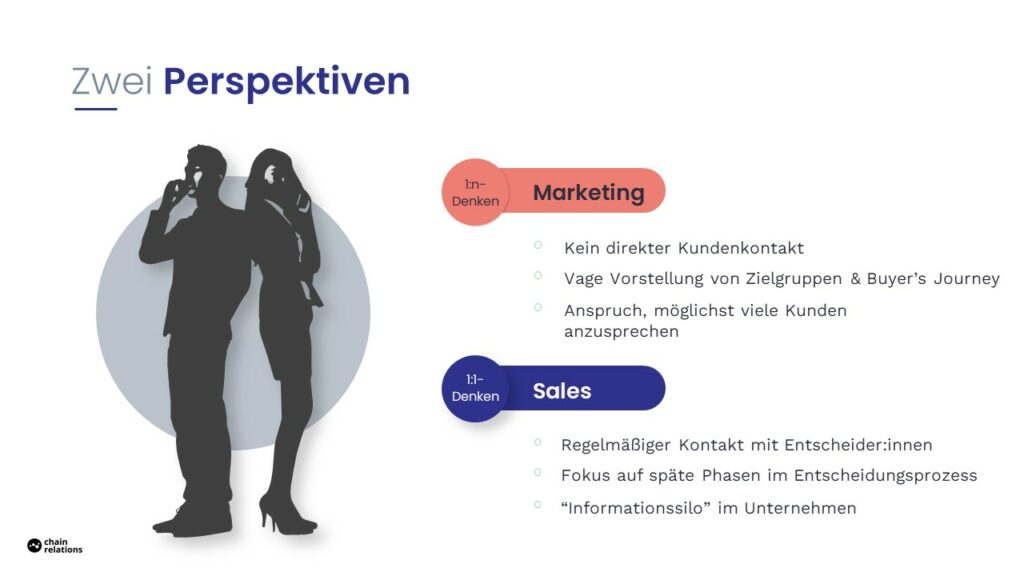
Marketing und Vertrieb rücken enger zusammen
Der Buyer-Persona-Ansatz kann diesen Prozess des Zusammenrückens unterstützen. Wenn das Marketing als eine Abteilung wahrgenommen wird, die Personas auf der Grundlage offener Kundeninterviews entwickelt, werden diese Buying Insights (bzw. Customer Insights) das Interesse des Vertriebs wecken.
Eine Buyer Persona kann somit als Verbindungschiene dienen. Wenn das Marketing den Stimmen der Kunden Gehör verleiht, liefert es dem Vertrieb produktiven Input, hinterfragt bestehende Ansichten und gibt Input für die Segmentierung.
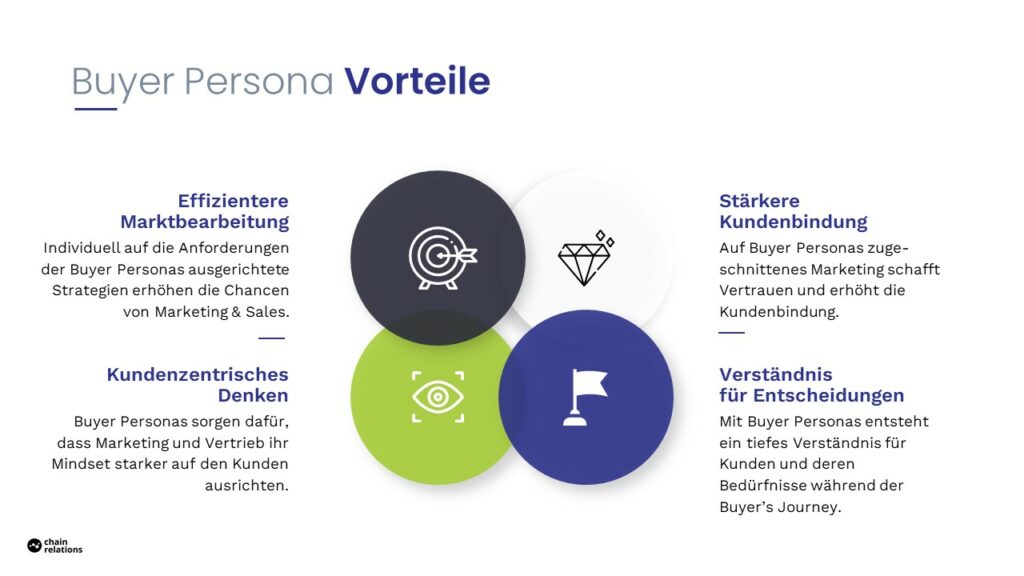
Vertriebsmitarbeiter:innen, die direkt mit Kunden interagieren, wollen möglichst viel über deren Erwartungen, Wünsche und Probleme erfahren. Kundenwissen ist Macht. Je besser man weiß, wie sein Gegenüber „tickt“, welche Bedürfnisse er hat und was ihn an der angebotenen Lösung zweifeln lässt, desto besser kann man darauf einstellen. Das erhöht die Chance auf den Abschluss.
Marketer, die Buyer Personas entwickeln, profitieren von dem neuen Kundenwissen und gewinnen an Selbstbewusstsein. Dieses ermöglicht es ihnen, hochwertigen Content zu erstellen. Dieser geht dann gezielt auf die Bedürfnisse potenzieller Kunden ein und hebt sich kommunikativ effektiv von Mitbewerbern ab.
Buyer Personas können noch mehr. Sie helfen auch bei Produktinnovationen. Dafür müssen Sie die neuen Erkenntnisse strukturiert in die Produktentwicklung bringen.
Dazu ein Beispiel aus der Praxis
Beko ist ein türkischer Hersteller von Haushaltsgeräten. Dieser befragt traditionell potenzielle Konsumenten, bevor ein Modell auf den internationalen Markt kommt. Die Erkenntnisse aus den Gesprächen mit chinesischen Kunden führten Beko zu einem neuartigen Kühlschrank. Er unterscheidet sich grundlegend von denjenigen, die in westlichen Ländern verkauft werden.
Reis ist in China ein Grundnahrungsmittel. Aber erst durch die Befragung erfuhr der Anbieter, dass die Menschen dort einen Kühlschrank wollten, in dem sie Reis bei geringer Luftfeuchtigkeit und einer Temperatur von 10 Grad Celsius aufbewahren können. Bei konventionellen Kühlschränken ist die Temperatur deutlich niedriger.
Dieses Wissen führte zu einem neuartigen Kühlschrank. Statt der üblichen zwei Kühlstufen enthält er für den chinesischen Markt drei Fächer, die jeweils mit Temperatur- und Luftfeuchtigkeitsreglern ausgestattet sind.
Der Kühlschrank wurde ein Verkaufsschlager in China. 2013 erhielt Beko für dieses Produkt auf der Internationalen Funkausstellung (IFA) in Berlin eine Innovationsauszeichnung.
- Buyer Personas sind recherchebasierte Beschreibungen von „Entscheidungstypen“. Sie vermitteln, wie Kundensegmente entscheiden und was sie von Anbietern erwarten.
- Die Erstellung von Personas erfolgt oft via „Guessing Game“ anhand eines Templates oder detaillierter Marktforschung. Ein besserer Ansatz ist, wenn Entscheider:innen die Story ihres Kundenreise erzählen und wir zunächst gut zuhören und Fragen stellen sowie anschließend den Input analysieren.
- Interviewbasierte Buyer Personas geben Aufschluss über die 5 Rings of Buying Insights (Investitionsauslöser, Erfolgsfaktoren, typische Hürden, Entscheidungseinflüsse & -kriterien). Das hilft Marketing und Vertrieb, sich an den Anforderungen der wichtigsten Zielgruppen auszurichten.
Fazit: Buyer Personas erstellen
Über Buyer Personas kursieren viele Mythen. Die Wahrheit ist: Informationen wie Alter und Geschlecht, Beziehungsstatus oder Einkommen haben wenig Aussagekraft, wenn es im B2B-Bereich um Kaufentscheidungen geht. Um echte Buyer Personas zu erstellen, müssen Sie sich auf die Faktoren konzentrieren, die den Kauf unmittelbar beeinflussen.
Offene Interviews sind, wenn sie professionell durchgeführt werden, eine reichhaltige Quelle für die Entwicklung einer aussagekräftigen Buyer Persona. Sie sind mit einer Mine vergleichbar, die eine große Goldader enthält. Eine Goldader zu entdecken, ist eine Sache. Eine Tasche voller Goldbarren auf den Tisch stellen zu können, eine andere. Das Gold muss erst geschürft, gereinigt und in handhabbare Barren umgegossen werden.
Anders ausgedrückt: Die Bedeutung, die der qualitativen Datenanalyse zukommt, sollte nicht geringeschätzt werden. Marketer können für ihre Fragestellung extrem aufschlussreiche Dialoge mit Kunden führen. Wenn sie jedoch nicht die relevanten Informationen erschließen, daraus Schlussfolgerungen ziehen und Ergebnisse bündeln, wird die Buyer Persona am Ende recht blass wirken.